Aimee Recently Found Out That She Flunked Math Again She Is Feeling Pretty Bad About Herself
For some of yous, school is officially in full swing. The newness has worn off a bit, and the dreaded homework has fix in. Maybe you're already tired of information technology all. Officially, I am hither to tell you: stay in school. Schoolhouse is worthwhile and our dismal public education system is what is going to destroy/has already destroyed this country. But information technology'south true that there are lots of notable visionaries, literary and otherwise, who dropped out of school—or were kicked out—for one reason or some other. Y'all probably already know about some of these: Mark Twain, Jack Kerouac, Jack London, William Faulkner, Harper Lee, F. Scott Fitzgerald, etc. But things are a scrap unlike at present, and so I've tried to keep this list a bit closer to gimmicky. Below, a list of successful writers who quit schoolhouse, took a break, got expelled, and became intellectual superstars anyhow. Jackson matriculated at the University of Rochester (here is her pretty cute student ID card), and would accept been role of the class of 1938 had she non dropped out subsequently her sophomore yr. Or, I suppose "dropped out" isn't exactly the correct term—her grades were so bad that twelvemonth that at the end of it she was asked to leave. In her biography of Jackson, Ruth Franklin notes that the writer after commented that she had been kicked out "considering I refused to go to any classes considering I hated them." She spent the next year writing, forcing herself to produce at least a thousand words a twenty-four hour period, and when she practical to Syracuse University she did then with the goal of making writing her career. She matriculated there in September 1937, speedily constitute her anxiety, began publishing her work, and graduated in 1940. One of our best living SF writers dropped out of Urban center college after only a semester—though he came back with vigor to the academic world equally a professor, educational activity at several great schools including the University of Massachusetts Amherst, Cornell, and Temple Academy. When an interviewer asked him in 2011 why he'd dropped out, Delany said: "I wasn't smart enough." But of course that isn't truthful, considering he's a brilliant author, so he continued: By that I mean I lacked a detail kind of organizational field of study or intelligence. I had the reading under my chugalug. I had the analytical chops. I was a magpie for picking up facts and dates. But to do well at college—there's no way around it—yous take to be able to organize your time, which I could not do to salvage myself. I'd get started on one thing, and twenty minutes afterward I'd be off on another, in the midst of which I'd pick up some book on calculus or archaeology or Galois theory and read the odd hundred pages near that. I was intellectually all over the place. I was writing music, directing plays, acting in them, singing in folk groups, choreographing dances, and if I had a newspaper due next week, there was at well-nigh a one-out-of-five take chances I would cease it—some of which, yep, was the bad side of Dalton, because they'd been fairly accepting of that sort of thing and had often been willing to cutting me some slack. But I didn't take the discipline. Still, not once did I ever call up, Hey, I'1000 superior to all of this! I never thought, I know more than these people. When I flunked out, I flunked out miserably, spectacularly, and I was mortified. I thought, The truth is out, I'grand an idiot. Now everyone knows. Information technology took me a while to realize that if a teacher had taken me bated and said, "Come on, Chip, sit down, let'south talk, this is how you have to do this," probably I would have learned how to negotiate information technology. But nobody did. Once he'd become a comparative literature professor, Delany wrote an essay entitled "How to Do Well in This Grade" and handed information technology out to his students. "Basically it's about what's gained by living your life in end-stopped time units, both for work and for play," he said. "I wish I'd had it when I entered college." This one is my favorite: the hilarious Fran Lebowitz was a terrible student—that is, once she'd graduated from grammar school, "where the main requirement was drawing Pilgrims, which I wasfantasticat." In an interview with CBC Radio One, she said that ane of the reasons she didn't practise her piece of work in high schoolhouse was because she was reading also much on her own, and she was often thrown out of the classroom for reading during lessons. "I would put a volume I was reading behind my volume . . . I was thrown out of form in grammer school numerous times because I was reading James Thurber, and you could not stop laughing. You cannot secretly read James Thurber." She was doing and so badly in public schoolhouse—getting report cards total Fs, sleeping in class (if not reading)—that her parents sent her to a individual school "at tremendous fiscal sacrifice which was mentioned hourly." It was an Episcopal girls' school, and she didn't last at that place very long. The headmaster expelled her in her senior twelvemonth, telling her mother, "She's a very bad influence on the other girls and she'southward usurping my power." In hindsight, she said, "I think I was thrown out of school for what my mother used to phone callthat look on your confront." Perfect. Equally yous'll know dubiousness know if you've ever read i of his novels, McCarthy doesn't do things by halves—he'south more likely to do them double. So you may not exist shocked to learn that he didn't driblet out of the University of Tennessee once, but twice. The first fourth dimension was in 1953, to join the Air Force. He was discharged in 1957, and shortly thereafter re-enrolled, studying physics and engineering, before dropping out over again after another ii years, withdrawing in 1959. According to Willard P. Greenwood'sReading Cormac McCarthy, it was during this second stint at college that McCarthy developed his distinctive punctuation style (read: very sparse punctuation). An English professor hired him to edit a volume of eighteenth century essays, and in the process, McCarthy "developed his distaste for the semicolon and . . . came to the realization that punctuation is not essential to clear writing." Well, I suppose he got something worthwhile out of college, fifty-fifty if he didn't get a degree. Jonathan Lethem might have been role of the Bret Easton Ellis/Donna Tartt/Jill Eisenstadt crew at Bennington—except for the fact that he didn't stick around long enough. "I began dropping out of Bennington—rejecting it in a "you can't fire me, I quit" sort of fashion—immediately upon arrival," Lethem told The Paris Review. It'southward admittedly truthful that I was trying to show something past running away to a earth of privilege. I meant to prove I wasn't deprived, and my reward was a violent confrontation with the realities of form. A confrontation I'd and so spend x years recovering from. I was frightened past my male parent'due south maverick idealism, and I was equally frightened by what I saw as the corruption of art by money and connections at Bennington. He started writing his beginning novel and he decided he had to drib out to write it. The school cost a then astronomical xiv thousand dollars a year. I only wanted to piece of work in bookstores and write fiction. I explained it to myself very logically at the time—I liked hanging out with my new friends and I hated going to course. Since I was paying to get to course, I dropped out. I was one of those creepy dropouts who moves into his girlfriend'southward dorm room. She stole meals from the dining hall in a Tupperware container hidden in a hollowed-out textbook, and I sat in her room and wrote an unpublishably bad first novel. That novel wasApes In The Plan, which Lethem describes as "a heedless endeavour to splice J.P. Donleavy to Philip Grand. Dick and Devo (whose song, Jocko Homo, was the source of the title). I wrestled with this manuscript for more than three years, an effort that superseded my career every bit a college student, condign an autodidact'south (or drop-out's) self-assigned thesis work." He started it just before turning 19. He wouldn't brainstormGun, with Occasional Music, his kickoff novel, until he was 24, and it wouldn't be published until he was xxx. Nobel Laureate Doris Lessing barely even started high schoolhouse: she attended an all-girls Roman Catholic convent school in what is at present Harare. She hated it, and eventually was allowed to come abode at age thirteen—only to be sent away again to a boarding schoolhouse. It was meliorate, but she still hated it, and later coming downwards with a debilitating instance of pinkeye, she refused to go along with her instruction. At the age of fourteen, she quit forever. InThe Golden Notebook, she wrote: Ideally, what should be said to every child, repeatedly, throughout his or her school life is something like this: 'Y'all are in the process of being indoctrinated. We have not yet evolved a system of education that is not a system of indoctrination. We are sorry, merely it is the best nosotros can do. What you are beingness taught here is an amalgam of electric current prejudice and the choices of this item civilisation. The slightest expect at history will show how impermanent these must be. You are beingness taught past people who have been able to arrange themselves to a government of idea laid downward by their predecessors. It is a self-perpetuating system. Those of yous who are more robust and private than others volition be encouraged to leave and find means of educating yourself—educating your ain judgements. Those that stay must remember, always, and all the time, that they are beingness moulded and patterned to fit into the narrow and detail needs of this particular society. More than robust and private indeed. Kincaid is another writer who left school twice, though for very different reasons than McCarthy. Every bit a child in Antigua she was educated in the British colonial school system, and was an fantabulous student, ever at the tiptop of her class, only when she was 16, her stepfather became too ill to work and her mother took her out of school and then that she could help provide for the family. At 17, she was sent off to Scarsdale to get anau pairfor a wealthy family. "I wasn't quite a servant, simply almost," Kincaid said. The idea was that she would send money dwelling house, and go to night schoolhouse to get a nurse, but Kincaid took her freedom and ran with it, non fifty-fifty opening her mother's letters and eventually leaving her chore. She studied photography at the New York School for Social Enquiry, only presently moved to New Hampshire to attend Franconia College, because, she said, "I thought maybe I should go to college." But dropped out afterward a year, this time to return to New York and go a writer—first writing features and interviewing celebrities for magazines, and later writing iconic fiction and literary nonfiction. Happy ending! Mega-bestelling romance novelist Jackie Collins was trouble in school, and eventually her parents sent her to the all-girls Francis Holland Schoolhouse in Baker Street (school motto: "That Our Daughters May Be As The Polished Corners Of The Temple"). "I wasn't like the other girls," she said in a 2012 interview. "I had i friend a couple of years older than me who taught me everything I know. And the rest of them were just encarmine idiots, stupid fiddling girls." She got in a lot of trouble—writing and selling dirty limericks and other erotic literature, for one matter, and smoking of form—but said she was finally expelled, at the age of 15, "for playing truant and for waving at the resident flasher and going, 'Common cold solar day today, isn't information technology?', which the schoolhouse thought was disgusting." In response, Collins threw her school uniform into the Thames. After that, her choices were to get to reform schoolhouse or to join her sister in Hollywood. She chose the latter, had an affair with Marlon Brando and a brief acting career, but shortly switched to writing. Her very kickoff book, published in 1968, became a bestseller, and then every other volume she wrote after that did too. The hereafter writer ofThe Givermatriculated at Pembroke College in Brown University in 1954 simply left after her sophomore year, at age 19, to become married to a U.S. Navy officer. "Women did that then frequently in those days," she wrote. Merely she wasn't done with her schooling. 4 children, many moves and several years later, she managed to stop her caste—and then go on to graduate schoolhouse. "My children grew upward in Maine," she wrote." So did I. I returned to college at the University of Southern Maine, got my degree, went to graduate schoolhouse, and finally began to write professionally, the thing I had dreamed of doing since those childhood years when I had endlessly scribbled stories and poems in notebooks." Tobias Wolff famously had to forge his own letters of recommendation to get into the Colina School, a private Pennsylvania boarding school. He did make it, but was after expelled for reasons including failing to get good grades, keeping an "untidy room" and "eating potato chips while leaning out the window"—though in 1990 the school granted him an honorary degree ('64) and in 2004 presented with the school'southward "Sixth Course Leadership Honour," given annually to an exemplary role model for today's students. In a 2003 interview, Wolff explained: I was asked to leave in my last year not because of any misbehavior only because of my academic record. It was so abysmal that I lost my scholarship and of class couldn't afford to go. I just couldn't brand myself written report things I wasn't interested in, and now I wish I had. Not that I regret the path my life has taken, just I can't help my daughter with her math homework. Information technology's ridiculous. I simply couldn't pass a math class while I was there. I'll give myself this break—they were studying mathematics in a form that has since been completely abandoned. But it was a felix culpa. Information technology felt similar a disaster to me at the time and I ended upward enlisting and spending four years in the Army. But the truth is, I think I ended upward having a much more interesting life because of that expulsion. I don't regret it. Obviously, the schoolhouse does, at least a little scrap. Fun fact: Wolff's novelOld Schoolhouseis largely based on his experiences at the Hill School—and the photograph on the cover fifty-fifty shows the real dining hall.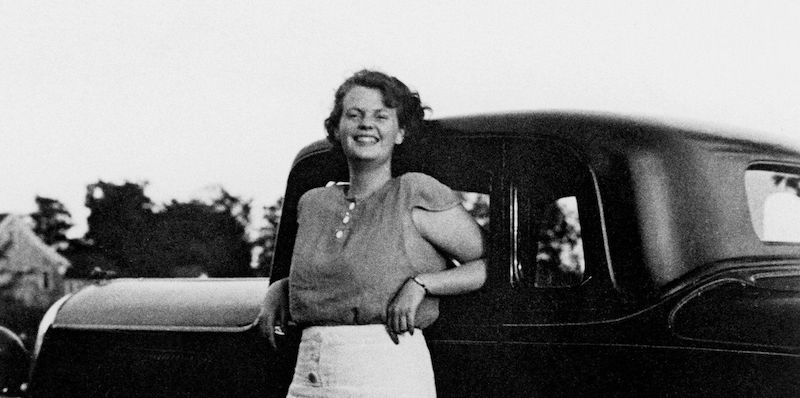 Shirley Jackson
 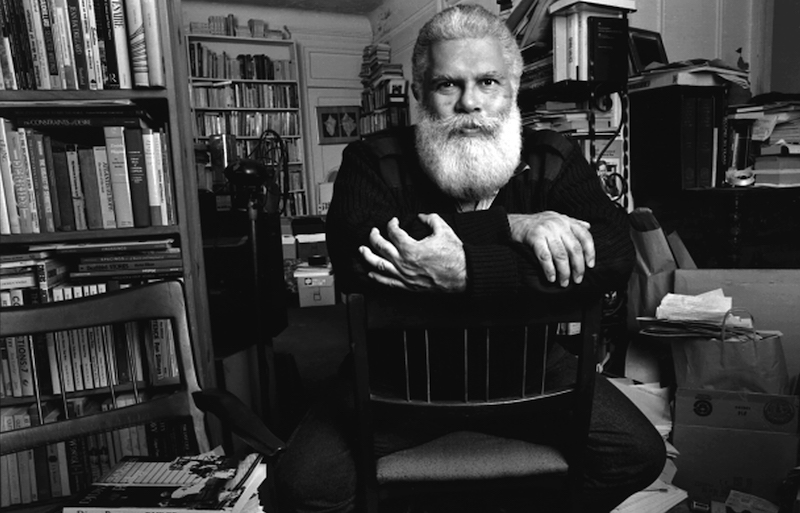 Samuel R. Delaney
 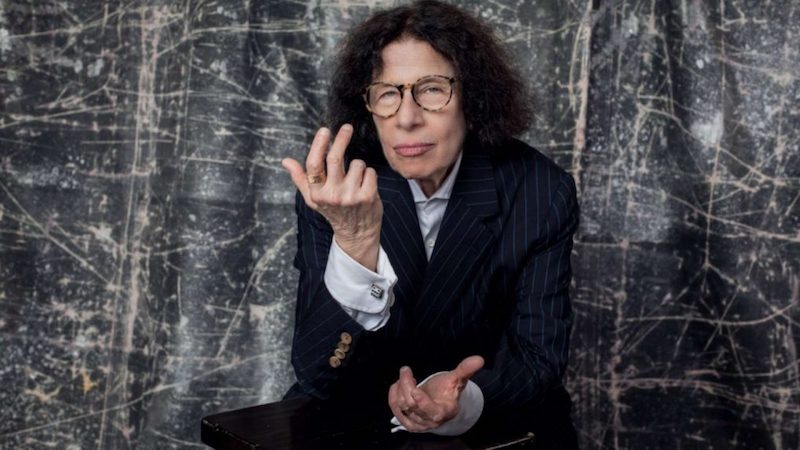 Fran Lebowitz
 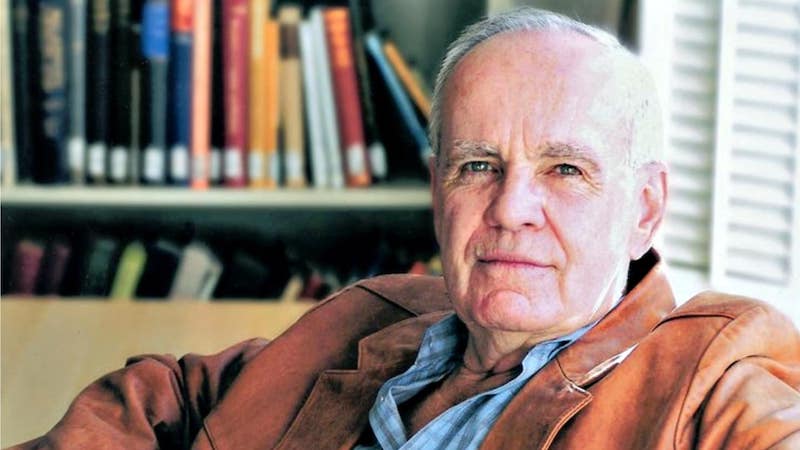 Cormac McCarthy
 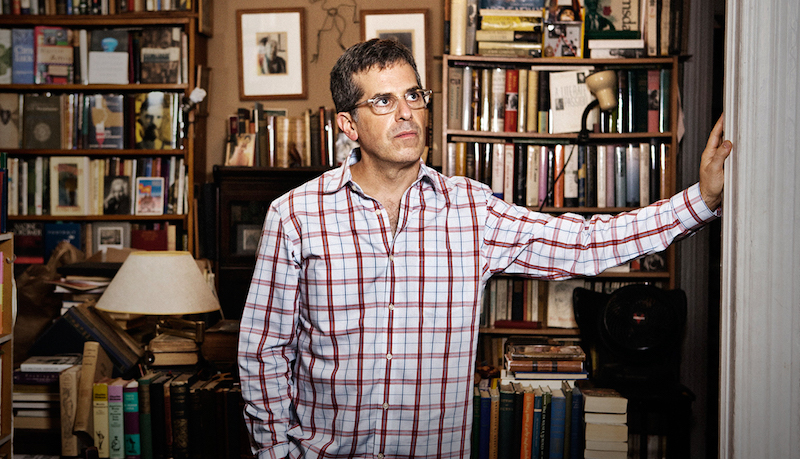 Jonathan Lethem
  Doris Lessing
  Jamaica Kincaid
  Jackie Collins
  Lois Lowry
 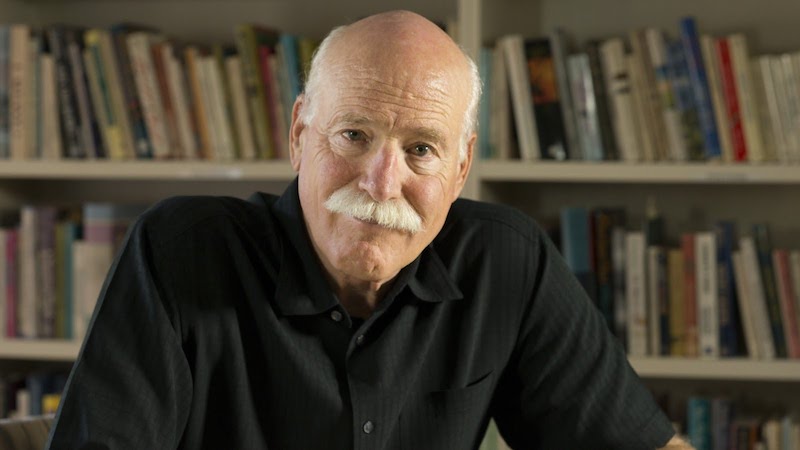 Tobias Wolff
Source: https://lithub.com/10-successful-writers-who-dropped-out-or-were-kicked-out-of-school/

Post a Comment for "Aimee Recently Found Out That She Flunked Math Again She Is Feeling Pretty Bad About Herself"